Florida law gives a pedestrian struck by a driver the right to recover medical costs, lost income and the lasting effects of the injury. That right holds even when the driver disputes what happened.
Crossing Central Avenue on the way to the Pier or walking through the Grand Central District should not leave you dealing with a claim on your own. At Shapiro Delgado, our St. Petersburg pedestrian accident lawyers get involved at that point, while the scene evidence and witness accounts are still available.
Our Sarasota and Palmetto offices are staffed by attorneys who know the roads, the courts and the crash patterns in this county. A St. Petersburg pedestrian accident attorney from our firm can look at a crash on 4th Street North and tell you what usually goes wrong there. That familiarity comes from working these files every week.
A recorded statement request or an early settlement figure often arrives within a day or two of a serious pedestrian crash, before anyone knows what the injuries in pedestrian accident cases actually involve. You are not required to respond to either one right away.Call us at (941) 954-4000 for a free case review first.
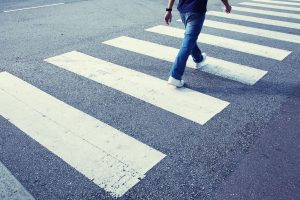 A pedestrian does not always have the right of way, and the difference between what people assume and what the statute says is where many claims get complicated. Florida Statute 316.130 sets out a layered system.
At a signaled intersection or a marked crosswalk with a stop sign, a driver must stop and stay stopped for a pedestrian who is crossing or about to cross. Where there is no signal or sign, a driver must yield to a pedestrian in the crosswalk who is on the driver’s half of the road or close enough to be in danger. A pedestrian crossing outside a crosswalk carries more responsibility for their own safety.
This distinction comes up in nearly every claim. Crossing mid-block near Williams Park rather than at the corner shifts part of the fault analysis, and that shift is where the negotiation usually happens. A St. Petersburg pedestrian accident lawyer who knows where the statute draws its lines can argue that point from the text of the law.
The statute also covers pedestrians walking along roads without sidewalks, which comes up often in older St. Petersburg neighborhoods that were never built with continuous pedestrian infrastructure. In those areas, the law expects a pedestrian to walk facing traffic on the shoulder, and a driver still owes a duty of ordinary care regardless of which side of the road anyone was on.
None of these rules eliminate a driver’s responsibility to pay attention. They simply shape how fault gets divided once a claim is under review.
The minutes after a crash set the tone for everything that follows. If you can move and think clearly, a few actions protect your health and your case at the same time.
None of these steps require legal training, only a clear head at a moment when everything feels hard to process. If a step gets missed because you were unconscious, in surgery, or simply overwhelmed, it is not the end of your case. Our team can still reconstruct much of what happened through police reports, traffic camera footage, and witness follow up.
St. Petersburg was not built around foot traffic the way older northern cities were, and that shows up in the crash data year after year. Wide, high-speed corridors like 34th Street and 4th Street North were designed to move cars through downtown quickly, which leaves long gaps between signals for anyone trying to cross on foot. Tourist corridors near Central Avenue and the Pier create a different problem. Heavy foot traffic mixes with drivers looking for parking rather than watching the crosswalk.
A few patterns show up again and again in the crashes we review.
The Florida Department of Highway Safety and Motor Vehicles publishes statewide crash data in its annual crash report, including pedestrian crash counts by county. We use that data to shape how we investigate a case from day one, since a corridor with a documented crash history can support an argument about road design or signal timing rather than driver error alone.
The Skyway Bridge corridor and the industrial stretches near the port bring heavy truck traffic into areas where sidewalks thin out or disappear. A commercial vehicle at low speed carries far more force than a sedan at the same speed. We factor vehicle type into the early investigation, since it changes which insurance policy applies and how a claim gets valued.
 Florida shifted its fault rules in 2023, and the change still surprises people. Under Florida Statute 768.81, a pedestrian who is found more than 50 percent at fault for a crash cannot recover any compensation at all. If fault is split, say 20 percent on the pedestrian and 80 percent on the driver, the pedestrian’s recovery is reduced by that 20 percent share rather than eliminated.
This is why the fault percentage matters so much. A pedestrian’s assessed share of fault can be the difference between a full claim, a reduced one and no claim at all, so it is contested in nearly every case.
Scene photos, camera footage and independent witnesses build the record that argument gets decided on. We start collecting them immediately.
Compensation typically covers ongoing medical costs, lost income and the physical toll of a lasting injury.
The full picture of a claim is usually clear weeks or months after the crash, not the day it happens. That is why we advise waiting on any settlement offer until treatment has run its course.
Accepting a check early closes the door on additional compensation, even if the injury turns out to require more than anyone expected. Call (941) 954-4000 before you respond to an offer.
Pedestrian crashes tend to produce more serious harm than collisions between two vehicles, and the full extent is not always apparent at the scene. Someone who feels able to walk away may need care within days.
We advise prompt medical evaluation for health reasons first. It also creates a dated record connecting the injury to the crash, which closes the gap between the crash date and the first treatment that otherwise becomes a point of dispute.
Age and prior health affect how a claim is valued. We account for both rather than applying one formula to every file.
 Florida gives injured people two years from the date of the crash to file a personal injury lawsuit, under Florida Statute 95.11. That window can feel long right after a crash and remarkably short once medical treatment, insurance back and forth and life in general eat into it. Waiting too long can mean losing the right to recover anything, regardless of how clear the driver’s fault was.
Some claims involve government-owned roads or vehicles, which carry a separate notice requirement under Florida Statute 768.28 before a lawsuit can be filed.
If a city vehicle, county road defect or public bus was involved, the sooner our office reviews the details, the more options stay open.
Adam Shapiro and our team carry caseloads across Sarasota, Palmetto and St. Petersburg. Pedestrian crashes on 4th Street North or near Tyrone Square are a regular part of our week, not an unfamiliar file type.
That regional footprint means established working relationships with local investigators, medical providers and court staff, which moves a case forward faster than starting cold.
Here is what that looks like in practice for a client.
If you were hit while walking anywhere in St. Petersburg, from the Grand Central District to the neighborhoods off 22nd Avenue North, reach out before you sign anything from an insurance company.
These are the questions we hear most often from people injured while walking in St. Petersburg.
Most pedestrian injury claims settle before trial once liability and medical costs are clear, but every file is prepared as if it might not. A carrier’s evaluation accounts for whether a firm is prepared to try the case.
Florida requires drivers to carry personal injury protection, which is limited and does not always cover a pedestrian’s full losses. Your own auto policy may include uninsured motorist coverage that applies even though you were not in a car. Household policies sometimes overlap, so it is worth reviewing coverage early rather than assuming none exists.
Hit and run crashes happen fairly often, and a driver’s identity is sometimes sorted out later through traffic cameras or nearby businesses. Uninsured motorist coverage on your own policy can often step in when the driver is never found.
We work on contingency, which means our fee is a percentage of what we recover rather than an hourly rate you pay along the way. There is nothing to pay upfront and no attorney fee if we do not recover compensation for you. Case evaluation is free, and we will put the fee terms in writing before you sign anything.
Yes. Serious harm from a pedestrian crash is not always apparent at the scene, and a same-day medical record connects the injury to the crash. Without one, the gap between the crash date and your first visit becomes a point an insurer raises later.
Parking lot crashes are still covered by Florida negligence law, though the right of way rules differ slightly from public roads. Backing vehicles and low visibility make these cases common near shopping centers.
Not for your legal rights, but it does affect the investigation. Traffic camera coverage, witness availability and even road design vary by area, and we adjust our approach accordingly.
 You do not have to figure out fault percentages, insurance deadlines or medical documentation on your own. Contact Shapiro Delgado for a free, no-pressure conversation about what happened and what your options are, whether the crash happened downtown, near the Pier or in a quiet neighborhood off Central Avenue. Call our St. Petersburg office at (941) 954-4000 or reach out online, and let our team start working on your case today.