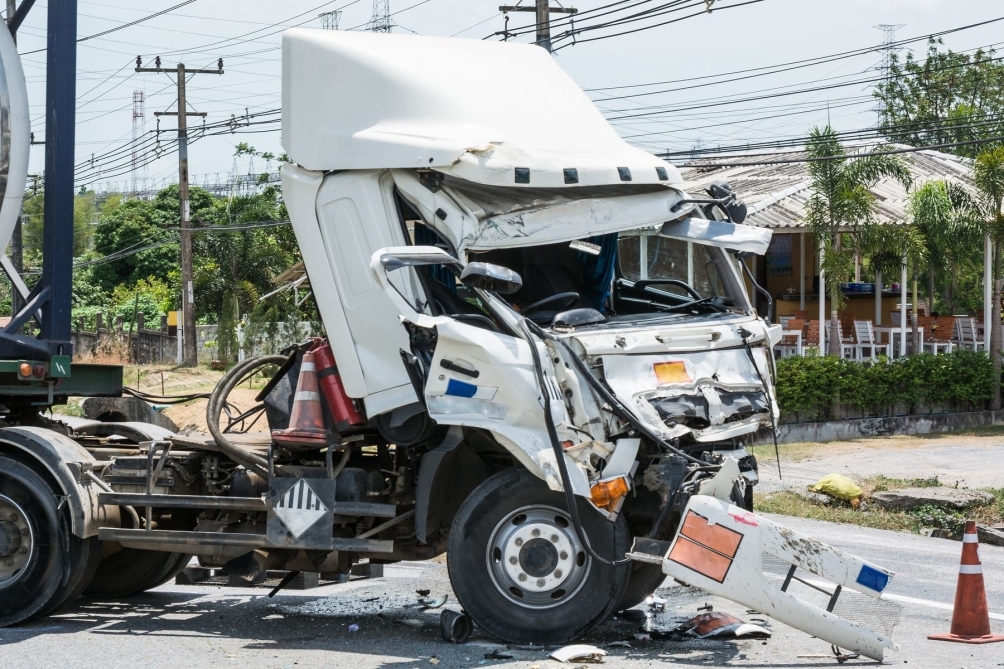
To build a strong case, you need official police crash reports, commercial driver logbooks, black box data, cell phone records, and scene photos.
Preserving these records quickly prevents transport companies from destroying vital operational files.
Semi-truck collisions along U.S. 41 or Interstate 75 force families to deal with sudden bodily harm, vehicle loss, and mounting medical bills. Securing reliable truck accident evidence in North Port immediately after a collision forms the bedrock of any successful legal claim.
Establishing fault requires proving that a commercial driver or motor carrier failed to operate safely. Getting help from a North Port truck accident lawyer ensures someone moves fast to protect your interests. You can secure physical items, electronic files, and witness testimonies before corporate defense teams try to clean up the crash site.
Commercial trucks carry sophisticated electronic devices that record detailed vehicle performance statistics during every haul. Motor carriers use these onboard computers to track their fleets, but the data also provides an objective breakdown of how a crash happened.
An electronic control module acts as a vehicle’s flight data recorder by tracking operational parameters every second. The unit captures engine speed, vehicle speed, brake application, throttle position, and seatbelt usage.
When a semi-truck slams its brakes on Toledo Blade Boulevard, the module records the exact second the driver applied force to the pedal.
Federal safety law limits how many hours a commercial driver can stay behind the wheel without rest breaks. An electronic logging device connects directly to the vehicle’s engine to record driving time automatically.
Reviewing these electronic logs reveals whether a driver spent too many continuous hours on the road or falsified off-duty entries to meet tight freight delivery schedules.
Modern shipping companies use cellular or satellite tracking systems to oversee real-time vehicle locations and driver behavior. These systems store GPS position history, sudden deceleration events, lane drift alerts, and cornering speeds.
Telematics data shows how fast the truck traveled down Sumter Boulevard leading up to the collision.
| Evidence Type | What It Records | Why It Matters |
| Electronic Control Module | Speed, braking force, throttle position, clutch usage | Shows driver actions in the seconds right before the collision |
| Electronic Logging Device | Driving hours, rest periods, engine run time | Proves federal hours-of-service safety violations |
| Fleet Telematics | GPS location, route history, sudden drift alerts | Reveals driving patterns and exact collision coordinates |
| Dashcam Footage | Forward-facing video, cab interior views | Offers visual proof of traffic conditions and driver focus |
Human error drives a major portion of freight vehicle collisions across Southwest Florida. Commercial operators must follow strict standards regarding physical fitness, proper training, and operational limits. Examining a driver’s background helps uncover long-standing patterns of reckless behavior or regulatory non-compliance.
Trucking businesses must maintain a detailed qualification file for every operator on their payroll. This file contains the driver’s commercial application, motor vehicle records, road test certifications, and annual performance reviews.
Uncovering a history of repeated traffic citations or prior crashes shows whether an employer knowingly put an unsafe driver on public roads.
Commercial drivers must pass periodic physical exams to ensure they can operate heavy rigs safely. The qualification file includes medical examiner certificates, physical test results, and waiver forms.
Discovering that a driver suffered from unmanaged sleep apnea or high blood pressure helps explain why a driver fell asleep at the wheel.
Federal laws require mandatory drug and alcohol testing following any serious commercial vehicle collision. Motor carriers must also conduct random testing, pre-employment screenings, and reasonable-suspicion checks throughout the year.
Toxicological records show whether controlled substances or alcohol hindered the driver’s reaction times during the incident.
 Shipping companies sometimes cut corners on routine maintenance to save money and keep trucks moving. Pushing a massive rig onto the highway with worn brake pads or bald tires creates an extreme hazard for everyone sharing the road. Investigating a firm’s corporate records reveals whether management prioritized corporate profits over community safety.
Drivers must perform daily pre-trip and post-trip inspections to spot mechanical problems before pulling onto the highway. Written driver vehicle inspection reports document issues like air leak warnings, worn steering components, or broken tail lights.
Sometimes, drivers report dangerous mechanical defects that fleet managers completely ignore to avoid shipping delays.
Heavy commercial vehicles require regular oil changes, brake adjustments, tire rotations, and suspension checks. Detailed maintenance receipts show if a freight carrier followed the vehicle manufacturer’s recommended service schedules.
Skipping scheduled maintenance work often directly causes catastrophic equipment failures on high-speed roadways.
The Federal Motor Carrier Safety Administration tracks safety compliance records for interstate transport companies. Federal safety audits, roadside inspection reports, and out-of-service orders highlight past corporate violations.
Showing that a company has a history of safety violations proves a pattern of systemic negligence across their entire enterprise.
Physical proof from the crash site disappears quickly due to heavy traffic, weather, and roadside cleanup efforts. Rain showers wash away skid marks, while towing crews quickly clear away scattered vehicle debris. Gathering visual proof right away locks down facts before conditions change.
Scuff marks, gouges in the asphalt, and tire skid tracks reveal vehicle paths, impact points, and braking efforts. Long skid marks show that a driver tried to stop, while a total lack of skid marks indicates the trucker never applied the brakes.
Mapping these physical marks allows accident reconstruction specialists to measure pre-impact speeds accurately.
Deformation patterns on crushed cars show the angle of impact, speed differences, and point of initial contact. Paint transfer on side panels helps prove if a tractor-trailer performed an illegal lane change or sideswiped a smaller vehicle.
Preserving both vehicles in their post-crash state prevents insurance adjusters from denying how the impact occurred.
Shifted or spilled freight often causes a trailer to tip over or jackknife across traffic lanes. Inspecting cargo manifests, weight station receipts, and tie-down straps determines if improper loading played a role.
Overloaded trucks require much longer distances to stop, placing surrounding motorists at grave risk.
Photographs and video clips remove guesswork by showing exactly what happened before, during, and after a collision. Visual records provide clear evidence that insurance adjusters and defense lawyers cannot easily argue against. Collecting imagery from all available sources helps create a complete picture of the crash scene.
Many commercial fleets install forward-facing and cab-facing cameras to monitor driving behavior. Neighboring storefronts, traffic surveillance systems, and home security cameras near intersections like Price Boulevard may also capture the crash.
Securing this footage provides objective visual proof of signal lights, speed, and road conditions.
Taking pictures from multiple angles captures the full scope of the crash site. Valuable photos include traffic signs, weather conditions, road hazards, sightline obstructions, and final resting positions of all vehicles.
Photographing shattered glass, oil spills, and broken car parts helps experts establish the exact location where the impact occurred.
Capturing images of physical injuries immediately after the crash shows the severe harm you suffered. Pictures taken in the emergency room, along with photos of surgical incisions, bruising, and cast placements, document your physical recovery steps.
These visual records make it much harder for insurance companies to downplay the pain you endured.
Neutral third parties provide vital testimony because they have no financial stake in the outcome of a case. Statements from eyewitnesses help confirm your account of how the collision happened. Police officers also collect basic facts and document their initial findings at the scene.
Bystanders, occupants of other cars, and local store workers offer an unbiased view of driver actions. Witnesses can confirm if the truck driver ran a red light, swerved across lanes, or drove erratically before the crash.
Gathering names and contact details right away ensures these key accounts are preserved.
Investigating police officers write an official crash report detailing the date, time, weather conditions, and involved parties. The officer notes visible vehicle damage, draws a diagram of the crash, and records any traffic citations issued.
While police reports are not always fully admissible as evidence in court, they give your personal injury attorney a strong foundation to build upon.
Emergency medical technicians and paramedics record your immediate physical condition, symptoms, and statements at the scene. EMS charts document confusion, severe pain, loss of consciousness, or obvious physical trauma.
These early medical notes establish that your injuries resulted directly from the truck collision, not a pre-existing health condition.
Proving liability is only half the legal battle; you must also demonstrate the full scope of your injuries and financial losses. Detailed medical records show how the crash harmed your body, while financial documents track out-of-pocket costs. Combining these documents helps secure the financial recovery needed to cover long-term treatment.
Comprehensive medical files include emergency department notes, X-ray images, MRI scans, surgical records, and physical therapy notes. Doctor notes detail the diagnosis, required treatments, and expected long-term health outlook.
These medical documents prove the severity of your injuries and link them directly to the truck collision.
Proof of Lost Income and Earning Capacity
Severe injuries often keep people away from work for months or permanently limit their ability to earn a living. Pay stubs, tax returns, and employer statements document the exact income lost during your physical recovery.
Vocational specialists can also use this information to calculate the loss of future earning potential caused by permanent disabilities.
Keeping a daily journal helps track physical pain levels, mobility limitations, and sleep disruptions throughout your recovery. Writing down lost family activities, cancelled plans, and emotional struggles preserves details that medical records miss.
This personal log helps show the real impact the crash has had on your everyday quality of life.
Navigating a North Port truck accident claim while trying to heal places heavy demands on injured individuals and their families. Commercial shipping lines send team investigators to crash scenes within hours to build a defense and protect their profits.
Retaining legal support ensures someone moves just as quickly on your side to preserve key proof before it disappears.
Gathering important evidence in a truck accident case requires sending formal legal preservation notices to prevent trucking companies from wiping electronic drive logs or destroying vehicle files.
Our law firm brings over 100 years of combined injury legal experience to defend your rights against large freight lines and insurance corporations. Our team has recovered well over $300,000,000.00 for accident victims across Florida’s Gulf Coast.
Partner David Shapiro is a Board Certified Trial Lawyer by the Florida Bar, and partner Jim L. Delgado is fluent in Spanish. This ensures our firm can effectively communicate with and support diverse families across our local communities and high quality the utmost legal representation.
Taking early legal action protects your rights and keeps corporate defense teams from hiding behind missing maintenance files or destroyed logbooks. Working on a contingency fee basis means you pay no upfront legal costs or hourly fees while we build your claim.
We are available 24/7 to discuss your case details and provide clear answers about your legal options. Gathering strong evidence after a truck accident empowers you to demand full accountability from negligent drivers, shipping businesses, and corporate insurers.
Motor carriers can overwrite electronic log records in as little as 30 days unless an attorney serves a formal legal preservation demand. Sending a preservation letter obligates the shipping line to preserve all electronic control module data, telematics, and cabin footage related to the event.
Florida uses a modified comparative fault standard, meaning you can still recover money for damages as long as you are not more than 50% responsible for the crash. Gathering objective proof like skid mark measurements, dashcam video, and electronic data helps disprove false claims made by the driver.
Yes, drug and alcohol test results required by federal safety regulations can be obtained through legal discovery procedures during a claim. Your legal counsel requests these toxicological reports directly from the motor carrier or through court subpoenas during litigation.
Multiple parties can share legal responsibility, including the truck driver, the freight carrier, the cargo loading team, vehicle maintenance contractors, or parts manufacturers. Identifying all responsible parties increases the insurance coverage available to help pay for your medical bills and financial losses.
Commercial shipping lines rely on legal teams and insurance adjusters whose goal is to minimize compensation payouts. A attorney protects your rights, collects time-sensitive black box records, hires accident reconstruction experts, and builds a strong case so you can focus on healing.
 If you suffered injuries or lost a loved one in a commercial truck crash caused by someone else’s negligence in North Port, Florida, contact Shapiro Delgado today at (941) 954-4000 to schedule your free consultation.